Reimagining Africa’s Health Architecture: Youth mental health at the centre of a changing ecosystem
By Aviwe Funani, Senior Policy Officer
12th May 2026
The Being Initiative (Being) was founded to respond to increasing mental health challenges among young people. Because young people’s mental health is shaped by the environments they’re in.
Being supports youth mental health by investing in research, innovation, and ecosystem building – all led by and for young people. As a founding partner, UnitedGMH leads the work with Being-funded Ecosystem Grantees, to develop enabling national ecosystems for youth mental health.
In this blog, Aviwe reports back from the World Health Summit Regional Meeting in Africa, and looks at how youth mental health is being recognised because of this work on ecosystem development.
From its inception, the Being Initiative has been part of many ‘firsts’. It supported the first Lancet Psychiatry Commission on Youth Mental Health, was part of the first main stage youth mental health session at the Conference on Public Health in Africa (CPHIA) 2023, featured in the first ‘Global Mental Health Financing Insights’ report, and participated in the United Nations Ministerial Hearings for the first-ever High-Level Meeting on Noncommunicable Diseases and Mental Health.
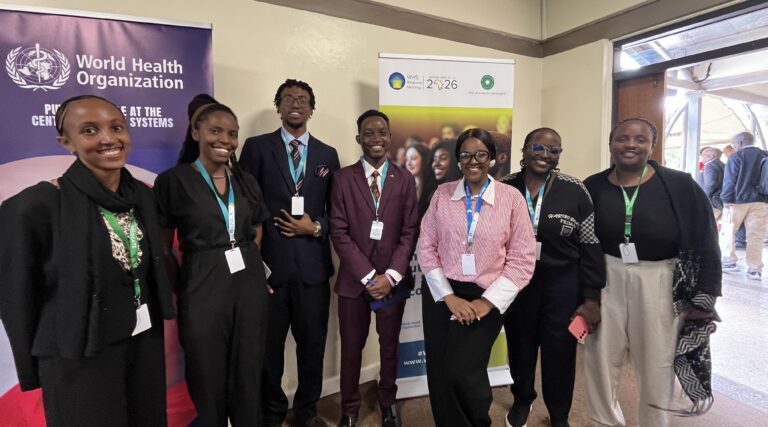
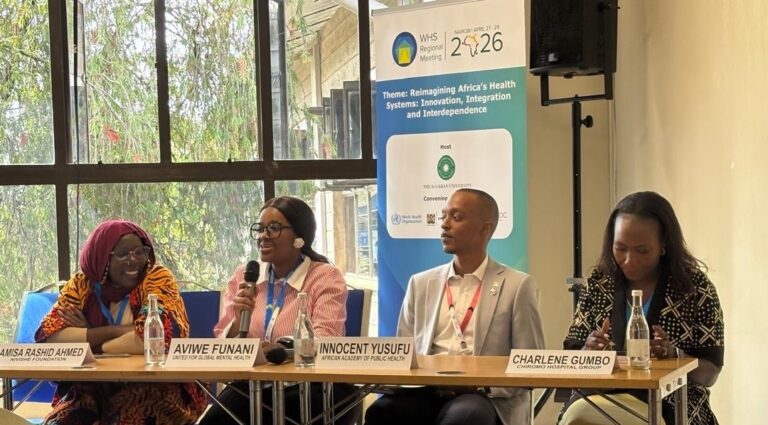
This time, at the first World Health Summit Regional Meeting in Africa, I found myself on a panel in a room full of young people for a session titled “Youth and Adolescent Mental Health: Building Psychosocial Resilience”. In that moment, I realised Beings’ vision of an enabling youth mental health ecosystem was part of making history.
The Oxford Dictionary defines “making history” as pioneering change, creating impact and leaving a lasting legacy. Watching young people, including Being Tanzanian grantee Innocent Yussufu, lead conversations on mental health at the World Health Summit, where the new Africa Health Order was being discussed, reinforced that Being was part of making history.
The New Africa Health Order
The World Health Summit Regional Meeting 2026 focused on delivering practical recommendations, fostering partnerships, and promoting evidence based solutions to strengthen Africa’s health architecture.
A key theme was the new Africa Health Order, a framework for Africa’s long-term health sovereignty and security. President Ruto of Kenya, the Summit host country, spoke about the importance of domestic resource mobilisation and sustainable financing through this Health Order. This framework is aligned with the African Union (AU) Common Position on Noncommunicable Diseases and Mental Health, the first official agreement by AU member states on these issues that was also informed by the Political Declaration on NCDs and Mental Health. The Common Position recognises mental health as a growing challenge needing urgent funding. United for Global Mental Health, alongside Being, at the World Health Summit echoed this as we called for increased regional financing for mental health and the development of government focused investment cases to prioritise financing mental health in this new Health Order.
From sessions, to corridor conversations, mental health was a recurring theme and young people were leading the charge.
Key Takeaways: Reimagining Africa’s health architecture
- Mental health policy change in Africa: The AU Common Position on NCDs and Mental Health represents a milestone for advocacy and provides a critical policy framework to drive long-term change in Africa.
- Youth Leadership: Youth advocates are actively shaping policies through active involvement in political processes and the Africa CDC Youth Programme.
- Sustainable Financing: Guided by the Africa Health Order and the Lusaka Agenda, African leaders are prioritising sustainable financing models, pooled financing and blended finance, to strengthen health security including mental health systems.
- Primary healthcare: The Africa CDC is calling for integrating mental health services into primary healthcare to improve accessibility, early identification and strengthening referral systems.
- Improved data: The Africa CDC’s newly launched health initiative, Strengthening Public Health Surveillance and Resilient Knowledge for Non-Communicable Diseases in Africa (SPARK), is strengthening mental health data systems for prevention, surveillance and care for noncommunicable diseases and mental health conditions across the continent.
- WHO AFRO has rolled out the Africa Health Workforce Agenda 2026–2035, which is aimed at shaping the future of health systems and health worker training and retention in the African Region. It is built around four pillars, including Universal Health Coverage and ownership through domestic financing. This creates an important opportunity to ensure mental health is fully integrated, not treated separately within UHC, primary care, domestic financing, and stronger community-based health systems across Africa.
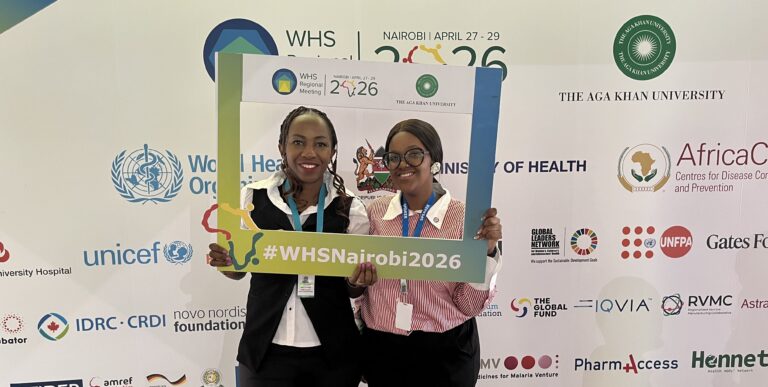
In October 2022, the Being Initiative was launched, and we knew it was special. Four years later, we see that mental health is not an afterthought in the health ecosystem, but is recognised as central in strengthening Africa’s health architecture. Africa is building a resilient and inclusive ecosystem where youth mental health underpins critical change. The work of Being has been, and will continue to be, pivotal in that change.
Click to learn more about our child and youth work