WHA79: From the Year of Promises to the Year of Progress
By Sarah Kline, CEO of United for Global Mental Health
29th May 2026
At the 79th World Health Assembly last week, a team of 17 United for Global Mental Health staff and Global Mental Health Action Network members from 14 countries worked hard to ensure that mental health was raised in meetings with governments – not pushed to the margins. Whether the conversation was about tackling mental and physical health challenges with Sir Mo Farah, climate resilience, pandemic preparedness, online gambling addiction, or youth wellbeing, our team argued strongly that mental health is a core part of the challenges and must be fully integrated in the future solutions.
Future Global Health Architecture
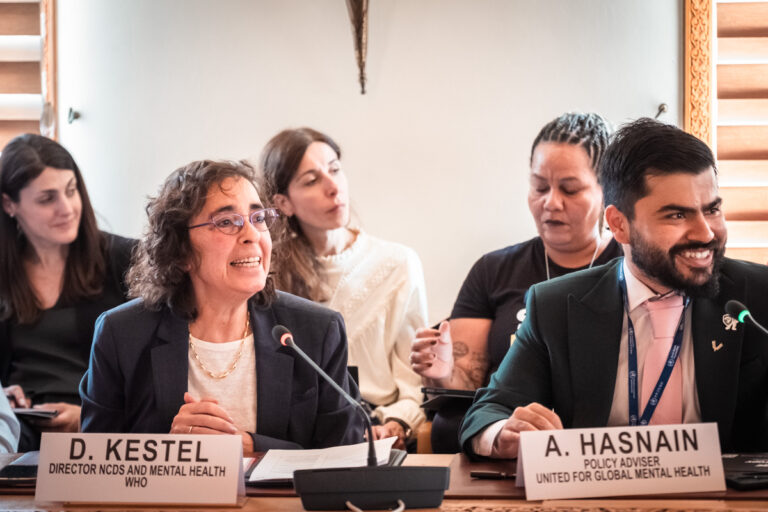
The future of the Global Health Architecture was the focus of many conversations and events. WHO has stated clearly in its Global Health Architecture states mental health is one of the current and future four biggest health challenges in terms of cases and deaths. And just this week, new figures estimated 1.2 billion people are living with mental health conditions. Over 100 member states, joined by professional groups and civil society organisations, delivered and endorsed statements during the World Health Assembly session on mental health. This was among the very highest numbers of interventions for the many health issues covered. If the future GHA is going to respond to the needs of member states and their citizens (as the Accra Reset and numerous other reviews have recommended), it needs to focus on helping to deliver Universal Health Coverage: putting mental health at the centre of the mandates and delivery of GHA organisations. Learn more here.
Universal Health Coverage
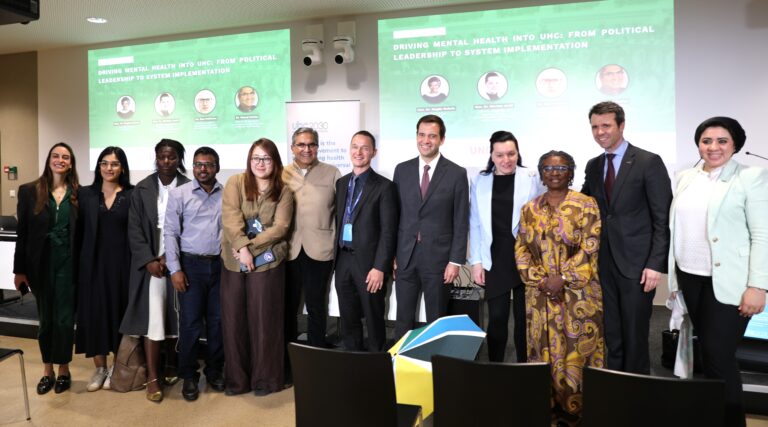
Members of the Global Mental Health Action Network hosted a powerful session on why – and how – mental health should be part of Universal Health Coverage. The conversation focused on how political commitments can be translated into real system change, and how lived experience leadership must guide the design of services that people can actually access and afford. UHC is not an abstract goal. It is about dignity, safety and the right to care. Learn more here.
With the UN High Level Meeting on Universal Health Coverage only a year away, Dr Jakub S. Bil, Co-Chair of the Universal Health Coverage Working Group of the Global Mental Health Action Network, says:
“The meaningful integration of mental health into the emerging Global Health Architecture and Universal Health Coverage agenda will ultimately be measured by whether it reaches those most frequently left beyond the protection of systems — including refugees, displaced populations, people affected by conflict and extreme poverty, and those excluded from healthcare and social protection structures. Universality cannot remain an aspiration reserved only for the already protected.”
Launch of Care Not Custody
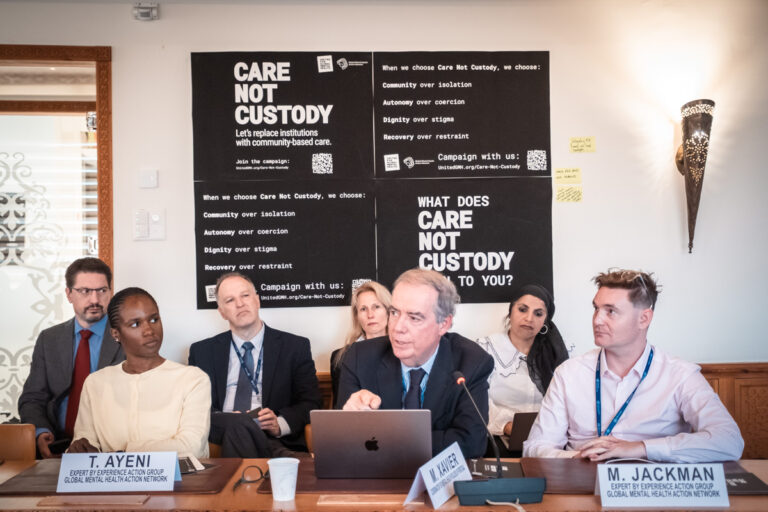
The launch of our Care Not Custody campaign at our side event with the UN Human Rights Office saw a room full of people committed to a revolution in mental health care – from governments, international agencies and civil society. What stood out was the courage of the people who shared their lived experience. People who had survived institutions that were meant to help them but instead took away their dignity, their autonomy and their hope. Their experiences illustrated exactly why this campaign matters and why a rights-based approach must be applied to all aspects of mental health systems. It was really encouraging to hear from WHO and the governments present what they will do to champion the campaign’s demands that people are treated with care in community-based settings. You can get involved in the campaign here.
Securing New Funding
At an event we cohosted with the NCD Alliance, governments and partners shifted the conversation from whether mental health should be funded to how we close the gap. Hearing ministers talk openly about domestic investment, health taxes and sustainable financing felt like a turning point. As we look ahead to the Financing Dialogue on NCDs and mental health later this year, investing in mental health is being treated as essential, not optional. Learn more here.
Tackling Online Harm
I spoke at a side event on tackling online gambling hosted by the Government of Brazil. The lived experience stories shared there were sobering. Gambling harms are rising everywhere, and the mental health impacts are profound. It was clear that we need stronger regulation, better prevention and more support for those affected. Mental health must be part of the public health response. Look out for the Lancet Commission on Ending Problematic Usage of the Internet later this year: I am very proud to be a Commissioner and contributing to this important initiative.
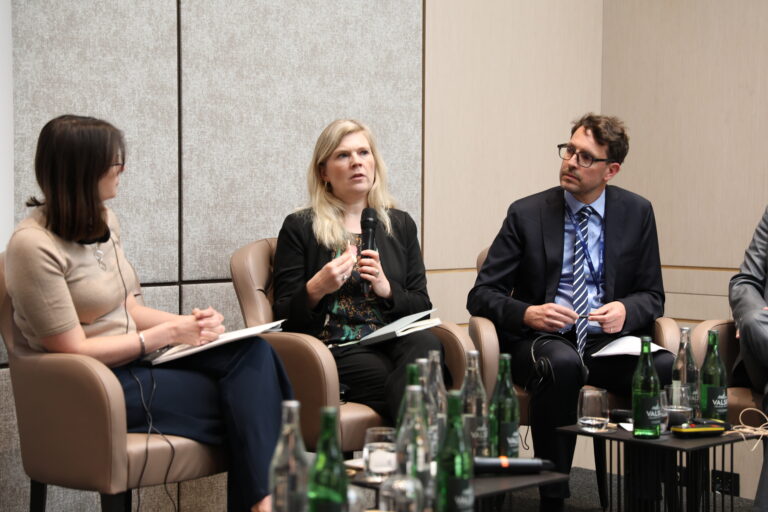
Sarah Kline, CEO of United for Global Mental Health speaking at the side event on tackling online gambling hosted by the Government of Brazil
Strength of the Mental Health Movement
None of this progress would have been possible without the Global Mental Health Action Network. Advocates were present in every room, reminding decision makers that global policy must reflect local realities. Their leadership ensured that mental health was not spoken about in abstract terms, but grounded in the lives of people and communities. Learn more here.
“Speaking at the World Health Assembly side events in Geneva was an incredibly meaningful experience for me. Throughout the week, I contributed to conversations on youth mental health, early intervention, online safety, suicide prevention, human rights, and community-based approaches to care alongside policymakers, clinicians, researchers, advocates, and organisations from across the world. As someone whose experiences with mental health services began as a teenager, it was both surreal and encouraging to now be contributing to discussions in these spaces myself. I left Geneva feeling incredibly reflective, grateful, and inspired by the people I had the opportunity to meet and learn from throughout the week,” says Tiwa Ayeni, Lived Experience Advocate.
As we look ahead, in 2026, we must work together to ensure that mental health is finally treated with the priority it deserves.
Click to find out more about our activities at WHA79.